
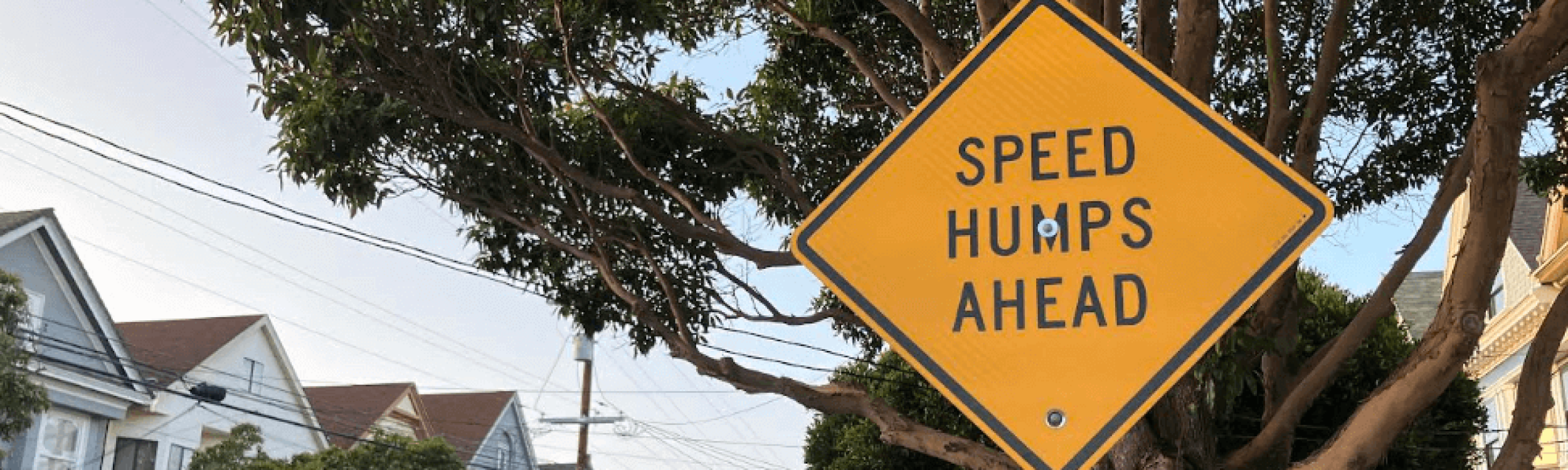
San Francisco needs a new approach for adding more speed humps
The data is shocking and yet not.
In May, the City’s new speed cameras issued nearly 100,000 warnings to drivers going more than 10 miles per hour over the speed limit. 100,000 at just 33 locations.
It’s more evidence of how rampant dangerous speeding is. Many of us have been feeling this for a long time, but especially in recent years. Driver norms have become a lot more aggressive, plus new vehicles accelerate so quickly now – some reaching 60 MPH in a few seconds.
The faster a driver is going, the more likely a crash is to occur and the more serious the consequences. People outside the vehicle are most at risk as speed goes up. By the time a driver is going 40 miles an hour, 3 out of 4 pedestrians will suffer a life-threatening injury or die if hit. Year after year, speeding is the #1 cause of severe and fatal traffic crashes in San Francisco.
It all adds up in terms of how much speeding threatens our safety.
Yesterday, the SFCTA approved funding for the SFMTA to complete a three-year backlog of about 300 “Residential Traffic Calming Program” projects. The majority of these resident-requested projects will add speed humps and speed tables to neighborhood streets, which are highly effective at reducing speeding.
“We have received an unprecedented volume of applications for traffic calming measures from every neighborhood across San Francisco,” states SFMTA on their website. This isn’t surprising given what we’re experiencing every day.
But the website also states: “Unfortunately, hundreds of applications have been received to date, far exceeding our available resources, and we are temporarily closing the program to new applications.”
This definitely doesn’t add up given the urgency to address dangerous speed.
However, Walk SF believes it’s time for an all-around better approach for adding many more speed humps and speed tables to streets – and more strategically.
The SFMTA’s current program is clearly in need of reform given this major backlog, but also to move past a piecemeal approach.
Boston, a peer Vision Zero city, has overhauled its Residential Traffic Calming program. Boston now has a “by right” approach so speed humps can be installed much faster and more strategically at the neighborhood scale, providing transparency to the community and cost-efficiency. Boston is on track to install 1,500 speed humps in three years with this more equitable approach.
Note that in addition to projects from the Residential Traffic Calming program, the SFMTA proactively installs traffic calming devices like speed humps and tables; they’ve added about 150 per year over the past five years. (You can now view SFMTA’s online database with the status of all approved traffic calming devices.) It’s also important to note that the San Francisco Fire Department currently has veto power over all vertical speed reducers.
We need the City to systematize and scale-up how it’s redesigning streets to achieve safe speeds. That’s what we’ve been asking for in the next Vision Zero policy and plan – including reforming the Residential Traffic Calming program.
More than anything else, safe streets depend on safe speeds. With your help, we’ll keep pushing for every possible solution to Slow Our Streets.