Lessons I’ve learned in sharing the story of my mom’s crash
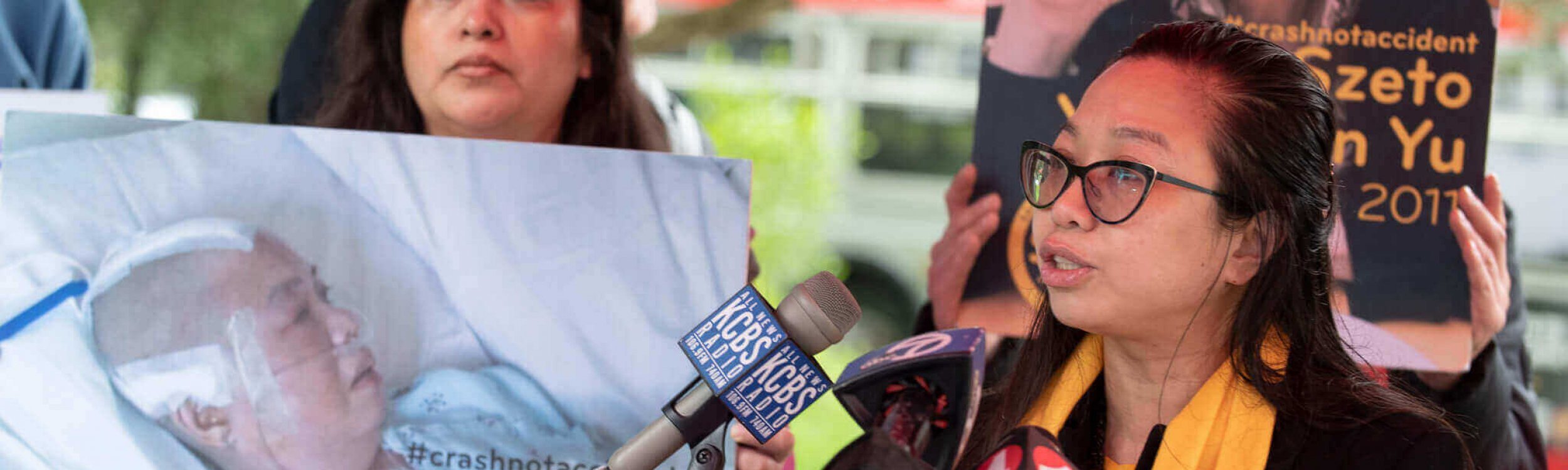
In the aftermath of my mother’s traffic crash fifteen years ago, my family was dealing with so much that it was sometimes hard to believe the rest of the world was still happening.
It took a long time to start reentering the world. When I began to, I was surprised to find how many people were going through similar things as I was. Either they had a loved one who had been hurt or killed in a crash, or they had survived a crash themselves.
I don’t remember exactly how we all found each other, but a small group of us did. We provided support to one another. We understood each other. And we ultimately founded the San Francisco Bay Area chapter of Families for Safe Streets, one of the first chapters in the country.
Support and understanding continue at the heart of our group. But many of us also feel called to work toward change so that others don’t suffer what we have. Traffic safety is a systemic public health and safety issue with solutions. And sharing our stories can show the need and urgency for these solutions.
I’ve been sharing the story of what happened to my mom for more than a decade now. I’ve written op-eds, talked with reporters, and met with elected leaders. It’s been one way for me to cope and process what happened, and move forward with my life. And I’ve seen it lead to real and meaningful change, like the speed cameras now on San Francisco’s streets.
Along the way, I’ve learned some lessons.
1. Working for change can help you, and that’s okay.
When I saw that there was a role for me to play in working for change, it helped me to keep moving forward. It’s helped me manage and channel my emotions in ways that can be hard, but also healing. It is productive, which feels good.
I’ve seen others in our group find some relief as well. It is a strange but welcome feeling. We’re learning how to live, and this can be part of that and there’s nothing to feel bad about.
2. Preparation and recovery are essential.
You likely know this already, but your body can relive the trauma when telling your story. Sharing it with someone you don’t know, like a legislator, or in a new setting, like at a public hearing, can add a layer of stress and amplify everything you’re feeling.
You need to be prepared for this: making sure you’re restored going into a situation where you’ll be sharing your story, plus having strategies for what to do if you’re triggered. And very important: you need to have a plan to take care of yourself after.
3. Change happens, but the pace is slow and the process can be brutal.
I told my mom’s story at the first press conference for the first state speed camera bill – in 2015! I had no idea at the time that it would take eight years and many exhausting attempts to pass a law. I also had no idea how maddening and hard on your soul the in-between years would be.
There’s a learning curve to this work and some harsh lessons. It’s hard not to take things personally, especially when you’re baring your soul. When a public or elected leader makes a comment that’s dismissive or is just plain wrong, it hurts. But our best path to win change is to keep showing up and sharing our stories. Thankfully, we have each other to lean on.
4. Have boundaries and step away when you need to.
Always remember that you get to decide when and how much you want to do in working for change. There are different seasons in life: times when you have capacity to work toward change – or don’t. Step in and out however and whenever you want, and never question what you need to take care of yourself or your family.
San Francisco Bay Area Families for Safe Streets is a group of people who have been directly affected by traffic crashes, including crash survivors and people whose loved ones have been killed or injured in traffic crashes. Learn more.
Questions? Contact marta@walksf.org.
Banner image by Emily Huston