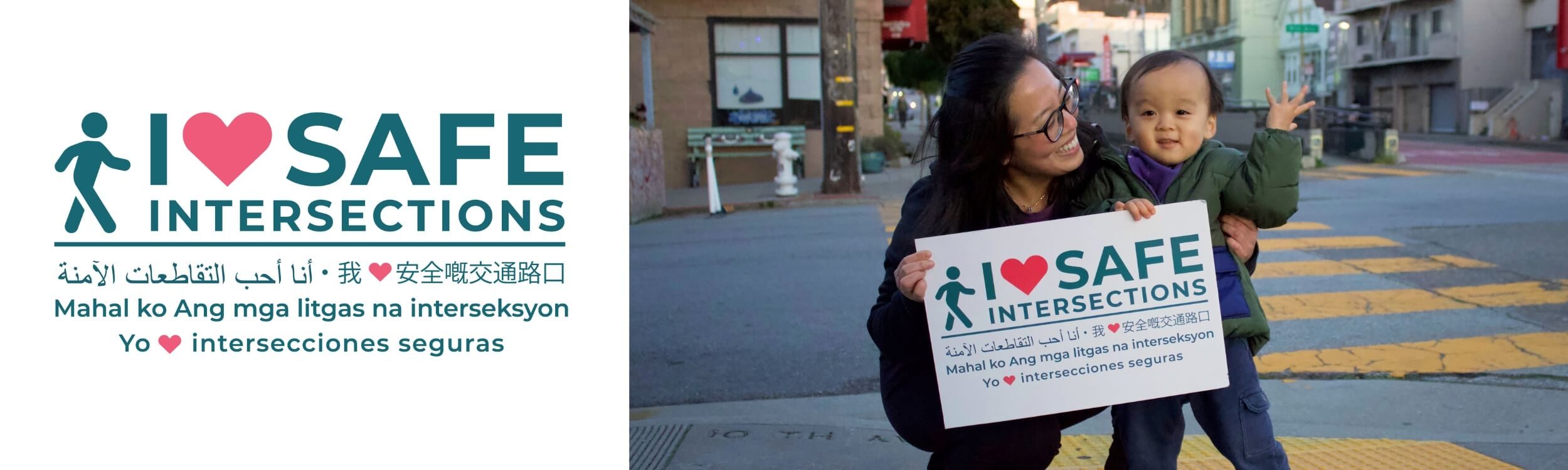
The ‘I Love Safe Intersections’ Campaign
Crossing the street in San Francisco shouldn’t be life-or-death. But too often, it is.
Every day, an average of three people are hit walking in San Francisco. The vast majority of these crashes happen in the intersection.
We all deserve to be safe when crossing the street, and especially kids, seniors, and people with disabilities. That’s why Walk SF was founded 25 years ago and we’ve been advocating ever since for this to become a reality.
Many more safety solutions are needed to keep us all safe in the intersection. The #ILoveSafeIntersections campaign is all about winning them. Join us!
As vehicles get bigger, heavier, and more powerful, it’s even more urgent that every preventative measure is in place to protect pedestrians.
Walk SF’s top priority in the ‘I Love Safe Intersections’ campaign in 2025 is daylighting. We want the City to paint daylighting at all intersections ASAP, and take additional steps to max out the potential of daylighting to prevent crashes. Learn more and take action.
How is an intersection made safer?
There are many pedestrian safety solutions that are proven to make intersections safer, especially when they are layered.
All of these are being used in San Francisco, but the scale varies widely, with some only starting to be used (like turn calming).
Here are what we consider to be core pedestrian safety solutions:
Daylighting
When vehicles – especially if they are large vehicles – are parked all the way to the curb, a driver can’t see a pedestrian stepping into the crosswalk, nor can a pedestrian see oncoming traffic. Daylighting removes parking at the crosswalk so everyone has clear sightlines. This simple solution reduces crashes by up to 30%.
Learn more about how daylighting works and why we need it at every intersection in San Francisco.

Turn Calming
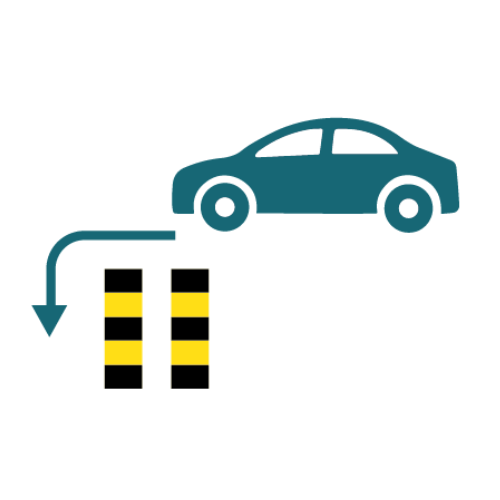
Drivers making left turns creates one of the biggest dangers for pedestrians. Drivers often take left turns faster than right turns, plus the angle of the turn creates blind spots and drivers can be paying more attention to oncoming traffic than people in the crosswalk.
New York City, which pioneered putting posts and rubber bumpers in intersections to slow turning drivers starting in 2016, now has turn calming at nearly 900+ intersections. Turn calming reduces pedestrian injuries by 20%.
Pedestrian Safety Zones and Bulbouts
Pedestrian safety zones use paint and posts to extend the curb at a corner, creating a buffer between vehicles and pedestrians. Pedestrian safety zones shorten the crossing distance plus improve visibility for drivers and pedestrians. Drivers typically make turns 55% slower, which reduces the chances of a crash and severe injury.
Sometimes pedestrian safety zones are made of concrete, which is even better! When a curb is extended at the corner using concrete, it’s called a bulbout.

No Turn on Red
Turning vehicles create one of the biggest threats to pedestrians, with drivers turning at lights accounting for 20% of pedestrian- or bicycle-related injury crashes in San Francisco (source: SFMTA).
No turn on red gives pedestrians and drivers separate times to cross, preventing dangerous conflict in the crosswalk. And all it takes is a simple sign.

Zebra-Striped Crosswalks
High-visibility, zebra-striped crosswalks increase the likelihood of a driver yielding to a pedestrian by 30-40%. Zebra-striped crosswalks can be seen from greater distances by drivers, plus pedestrians are more visible against the striped background. Most importantly, the crosswalk informs drivers that pedestrians might enter there.

Pedestrian Head-Start, Countdowns, and Enough Time to Cross at Traffic Lights
Giving pedestrians a ‘head start’ with the walk sign (known as ‘leading pedestrian intervals’) allows pedestrians a head-start to start to cross before drivers get a green light. This can reduce pedestrian-vehicle collisions by as much as 60%.
But pedestrians also need enough time to cross or they can be stranded in the intersection or put at risk of being hit by oncoming traffic. The SFMTA has committed to updating all traffic signals to 3.0 ft/second.
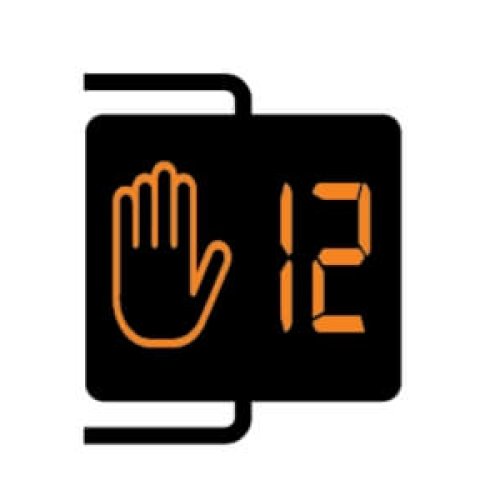
Pedestrian countdown signals show how much is left to cross the street before the light turns red, helping people make safe decisions about whether to wait for the next WALK signal.
Accessible Pedestrian Signals
Accessible pedestrian signals communicate WALK and DON’T WALK with auditory signals for people who are blind or low-vision.

Do you love safe intersections? Do you want Walk SF to push for every possible solution to keep you safe in the crosswalk? Make a donation now.