
Wins for pedestrians, traffic safety, and walkable communities this legislative session
On Monday, California’s legislative session closed, and we’re happy to share that almost every bill Walk SF supported made it over the finish line to become law.
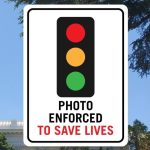
We celebrated a big win with Governor Newsom signing SB 720, the red light camera bill, plus several other bills that support the kinds of street design, transit-oriented development, and traffic safety enforcement needed for a more pedestrian-friendly San Francisco (and beyond).
Here’s more about what was passed in Sacramento this session:
SB 720: Creates Alternative Approach for Implementing Red Light Cameras
Walk SF strongly supported SB 720 because we believe it will reduce barriers for cities to use more red light cameras in order to take on what’s become a disturbingly common dangerous behavior. Learn more.
AB 1085: Cracking Down on Illegal License Plate Covers
Extreme reckless driving is incredibly dangerous – and holding drivers accountable becomes a lot harder when they’re using license plate covers. Assemblymember Catherine Stefani authored AB 1085 to help prevent this by raising penalties for manufacturers or retailers of illegal license plate covers to $10,000 per day.
AB 382: Setting Speed Limits in All School Zones to 20 MPH
Back in 2011, Walk SF led a successful campaign for San Francisco to create 15 MPH zones around all K-12 public and private schools citywide for schools on non-arterial streets (note: arterial streets near schools are exempt from this law, which is something on Walk SF’s radar).
AB 382 (Berman) lowers the speed limit around all school zones in California to 20 MPH. The bill also allows schools to specify hours for school zone speed limits, as opposed to lower speed limits that only apply “when children are present,” which is up to driver discretion. Even though this legislation largely does not apply to San Francisco, we are proud to support it in solidarity for safe streets everywhere!
SB 71: Streamlining Approvals for Pedestrian, Bike, and Transit Projects
In 2020, Senator Wiener passed SB 288, an important bill that expedited safe streets improvements by making pedestrian, bike, and transit projects exempt from CEQA review. Since then, crucial safety projects have moved forward significantly faster thanks to these exemptions, including over two dozen projects in San Francisco. This includes the city’s Vision Zero ‘Quick Build’ program, which uses paint, posts, signage, and signals to redesign streets for greater safety in months, not years.
SB 71 (Wiener) makes these exemptions permanent, ensuring that pedestrian, bike, and transit projects are built as quickly as possible – which is ASAP! (Another bill by Senator Wiener, SB 79, was also signed by the Governor. SB 79 increases the allowable density and height of housing near specific transit stations so more people can live in walkable neighborhoods with easy access to public transit.)
AB 1014: Lowering speed limits on dangerous state-owned roads
Here in San Francisco, we have seven very dangerous Caltrans-owned surface streets with serious speeding issues: Park Presidio, Lombard Street, 19th Avenue, Skyline Boulevard, Van Ness Avenue, Sloat Boulevard, and San Jose Avenue.
AB 1014 (Rogers) gives Caltrans, California’s Department of Transportation, the ability to lower speed limits on state-controlled roads that see heavy pedestrian traffic, are in school zones, or have been designated as a safety corridor.
This bill, like SB 960 passed last year, means there are greater opportunities to win meaningful changes to these streets to protect the most vulnerable users.
Two bills that didn’t move forward (yet)
AB 981: Using Intelligent Speed Assistance for the Most Reckless Speeders
Speeding is the #1 cause of severe and fatal crashes in San Francisco and statewide. And the threat is growing, with the automobile industry making bigger, heavier, more powerful vehicles than ever.
AB 981 (Gipson) would allow ‘active’ Intelligent Speed Assistance to be installed in the vehicles of drivers who have been charged for reckless driving and speeding multiple times. Speed-limiting technology directly addresses the behavior of high-risk drivers by having their vehicle automatically slow down when operated in excess of the speed limit. Walk SF continues to strongly support AB 981, which builds on our work in the 2023-2024 session on a different Intelligent Speed Assistance bill that Governor Newsom unfortunately vetoed.
AB 981 was made into a two-year bill, which means it’s still at play and will be heard in legislative committees in 2026.
SB 445: Streamlining transit projects
SB 445 (Wiener) would have streamlined approvals of major public transportation projects that require construction on property owned by another jurisdiction so these happen faster (the bill is especially pertinent to California’s High Speed Rail project). Unfortunately, this bill was held in Committee, so would have to start over in the next session.
What does this mean and what’s next?
All in all, the 2024 – 2025 legislative session was a strong one for getting more solutions on the ground faster – whether it’s red light cameras or street redesigns.
More and more with the support of our members, Walk SF is working not just in San Francisco but in Sacramento. The state legislature can support leaps of progress locally and beyond (like with speed cameras).
We’re already looking at what should be on our docket in the next couple years, and build on the wins this year!