
Governor Newsom signs the red light camera bill, SB 720
On October 13, Governor Newsom signed lifesaving legislation that supports cities in better taking on one of the most dangerous driving behaviors: red light running.
Senate Bill 720, authored by Senator Ashby (Sacramento and Elk Grove), creates an alternative approach for how cities can implement red light camera programs.
Walk SF strongly supported SB 720 because we believe it will reduce barriers for cities to use more red light cameras in order to take on what’s become a disturbingly common dangerous behavior.
SB 720 mimics AB 645, the legislation passed in 2023 allowing speed cameras to be piloted in six California cities (including San Francisco; speed cameras are now at 33 locations).
SB 720 includes important equity and privacy protections, is designed in a more efficient and less punitive way, and designates any camera revenues to be used for safe streets projects.
When drivers run red lights, they threaten our lives
The crashes that result from red light running are likely to be severe or fatal because they are “right-angle” crashes (i.e. the victim is broadsided). Drivers running red lights are often also speeding, raising the stakes even more if a crash occurs. As vehicles grow bigger, heavier, more powerful, and more prevalent, it poses an even greater risk especially to pedestrians.
A report recently released from our partners at Streets Are For Everyone (SAFE) in Los Angeles includes a sobering finding: severe and fatal crashes at intersections have doubled in California in the past decade. San Francisco ranks the second-most dangerous county with a population larger than 750,000 for severe and fatal crashes at intersections.
More on how SB 720 works
SB 720 allows cities to opt into a new approach for a red light camera program that is markedly different from how the current California vehicle code for red light cameras is implemented.
Under the existing red light camera legislation (which SB 720 wouldn’t replace, but would be an alternative option to), fines are upwards of $500 and violations are criminal penalties; safety cameras take photos of license plates (not drivers), which means many citations are unenforceable because the driver can’t be identified; and revenues are not required to go towards street safety infrastructure. Overall, this leads to a program that is very financially and administratively burdensome for both parties, and can be viewed as punitive.
Under SB 720, a city’s red light camera program (should the city opt into it) would include: (1) capping fines for first-time violations at $100; (2) ticket and cite the vehicle, not the driver (making this a civil offense), by taking photos only of the license plate, and (3) mandating that revenues go directly to safe streets infrastructure. This makes it easier for cities to enforce and recoup funds, addresses privacy concerns regarding data collection and storage, eases the burden of high fines and includes scaled fines for low-income people, and ensures a more systems approach to traffic safety.
What’s next now that SB 720 is law
Walk SF is a long-time advocate for automated safety enforcement to address the most dangerous driving behaviors. It’s why we pushed for so many years for San Francisco to be able to use speed cameras here.
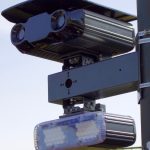
We have also advocated for years for more red light cameras in San Francisco. There are currently red light cameras at only 13 locations in San Francisco. Frustratingly, eight locations that the City committed to bring cameras to in 2020 are still not on our streets.
Now that SB 720 is law, Walk SF is pursuing how this can change San Francisco’s approach to – and embrace of – using many more red light cameras. Because we need them more than ever.
Gratitude to Governor Newsom, partners, and our members
I’m very grateful to Governor Newsom for supporting greater traffic safety and saving lives by signing SB 720.
And I’m grateful to many of you for flooding Governor Newsom’s inbox and phone lines with support for SB 720 over the past couple weeks. Showing that kind of support in the final stretch is crucial, and with your help we did it!
Our partners at Streets Are For Everyone deserve extra thanks for leading on this campaign, plus hats off to Walk SF members for supporting our work in San Francisco and in Sacramento!